
Chelsea Green Pharmacy
Starting a new injectable medication brings plenty of questions, and one of the most practical is also one of the most commonly asked: does it actually matter where you inject? With Mounjaro, the answer is yes, to a degree. While all three approved injection sites are clinically suitable, there are real differences in comfort, absorption consistency, and ease of self-administration that are worth understanding before you settle into a routine.
At our private clinic in Chelsea, we always take time to walk patients through injection technique properly before they administer Mounjaro at home. If you would like support getting started, contact our team or book an appointment at 6 Elystan Street, Chelsea.
Quick Summary: Mounjaro Injection Sites
Mounjaro (tirzepatide) can be injected into three areas:
- Abdomen (stomach) — the most commonly used site; consistent absorption and easy to self-administer
- Thigh (upper, outer) — good for self-injection; absorption may be slightly slower
- Upper arm (outer) — typically requires assistance for self-injection; useful for rotation
Rotate between sites weekly to reduce the risk of skin changes at any one location.
Why Injection Site Matters With Mounjaro
Mounjaro is a subcutaneous injection, meaning it is delivered into the fatty tissue just beneath the skin rather than into a muscle or vein. The rate at which the medication is absorbed into the bloodstream can vary slightly depending on where this fatty tissue sits, how much of it is present, and how active the surrounding muscles are.
For most patients, these differences are modest and unlikely to significantly affect overall outcomes. However, comfort, consistency, and confidence in technique all matter when you are self-injecting weekly for an extended period. Choosing the right site for your body and rotating correctly can make a meaningful difference to your experience of treatment.
Rotating injection sites within the same area is important to prevent lipohypertrophy, a build-up of fatty tissue caused by repeated injections in the same spot. While this guidance relates to insulin, the same principle applies to subcutaneous injections more broadly, including GLP-1 and dual-agonist medications such as Mounjaro.
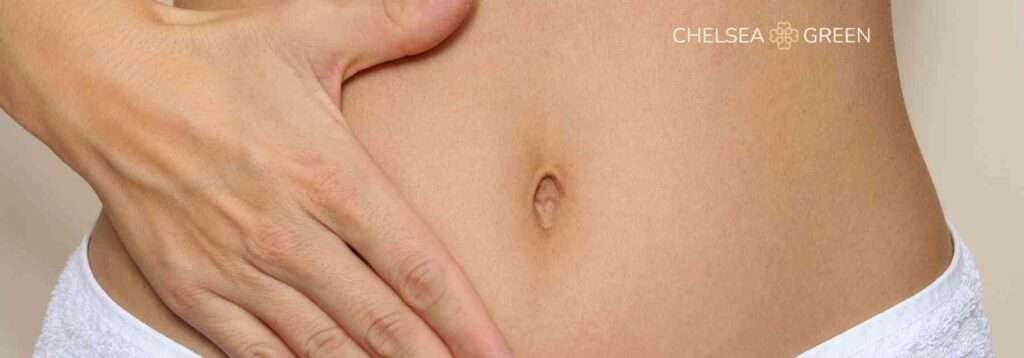
The Abdomen: The Most Commonly Used Site
For the majority of patients, the abdomen is the preferred starting point. The area around the navel offers a reliable amount of subcutaneous fat in most adults, which makes the injection straightforward and tends to produce consistent absorption.
Key points for abdominal injections:
- Inject at least 5cm away from the navel to avoid the denser tissue immediately around it
- Avoid the waistband area and any skin that is irritated, bruised, or scarred
- The lower abdomen and the area to either side of the navel are both suitable
- This site is the easiest to see and reach for most people, making self-injection more controlled
- Rotate within the abdomen by moving to a slightly different spot each week
If you carry most of your weight centrally, the abdomen may be particularly comfortable and accessible. However, if you have very little subcutaneous fat in this area, you may find another site more appropriate.
The Thigh: A Reliable Alternative
The upper, outer thigh is the second most commonly used site and works well for self-injection. Most people have sufficient subcutaneous tissue here, and the area is straightforward to access while seated.
Key points for thigh injections:
- Use the outer, upper portion of the thigh — avoid the inner thigh and the area directly above the knee
- Inject into the middle third of the thigh lengthways, on the outer side
- Absorption from the thigh may be marginally slower than from the abdomen, particularly after exercise involving the legs
- Avoid injecting into the thigh immediately before physical activity such as running or cycling, as increased blood flow to the muscles can alter absorption rate
- Rotate between the left and right thigh, as well as varying the exact spot within each
The Upper Arm: Useful For Rotation But Tricky To Self-Administer
The outer area of the upper arm is an approved injection site for Mounjaro, but it comes with a practical limitation: it is genuinely difficult to inject into your own arm with the same level of control and visibility as the abdomen or thigh. Most patients who use the arm do so with the assistance of a partner, carer, or healthcare professional.
Key points for upper arm injections:
- Use the outer, middle portion of the upper arm — roughly midway between the shoulder and elbow
- Avoid the deltoid muscle itself; the injection should go into the subcutaneous tissue, not the muscle
- The arm is a useful option for rotation purposes, particularly if the abdomen or thigh needs time to recover from repeated injections
- If self-injecting into the arm, use a mirror and take extra care with pen angle and depth
How To Rotate Correctly
Rotation is not simply about alternating between sites at random. A consistent rotation plan helps ensure that no single area is overused, which reduces the risk of skin changes, discomfort, and variable absorption over time.
| Injection Site | Ease Of Self-Injection | Absorption Consistency | Best Used When |
|---|---|---|---|
| Abdomen | High | Very consistent | First choice for most patients |
| Thigh | High | Good; avoid pre-exercise | Rotating away from abdomen |
| Upper arm | Lower (assistance helpful) | Good | Rotation or with assistance |
A simple approach is to work through sites in a consistent cycle: abdomen one week, thigh the next, and so on. Within each site, vary the exact spot by at least a couple of centimetres from the previous injection.
Frequently Asked Questions
Click on each question below to reveal answers to common questions we receive:
Does it matter which site I use every week?
Can I inject into scar tissue or stretch marks?
What should I do if I notice redness or a lump at the injection site?
Can I change injection sites if one becomes uncomfortable?
Do I need a prescription for Mounjaro?
Mounjaro Support At Our Chelsea Clinic
Getting injection technique right from the start makes a significant difference to your comfort and confidence throughout treatment. At our clinic at 6 Elystan Street, Chelsea, London, SW3 3NS, we provide full clinical assessment, prescription where appropriate, and hands-on guidance for patients starting Mounjaro.

Ready to start Mounjaro with the right support behind you?
